
Legionella in Water Tanks: How It Grows, Who Is at Risk and How to Prevent It
Water Safety
Published
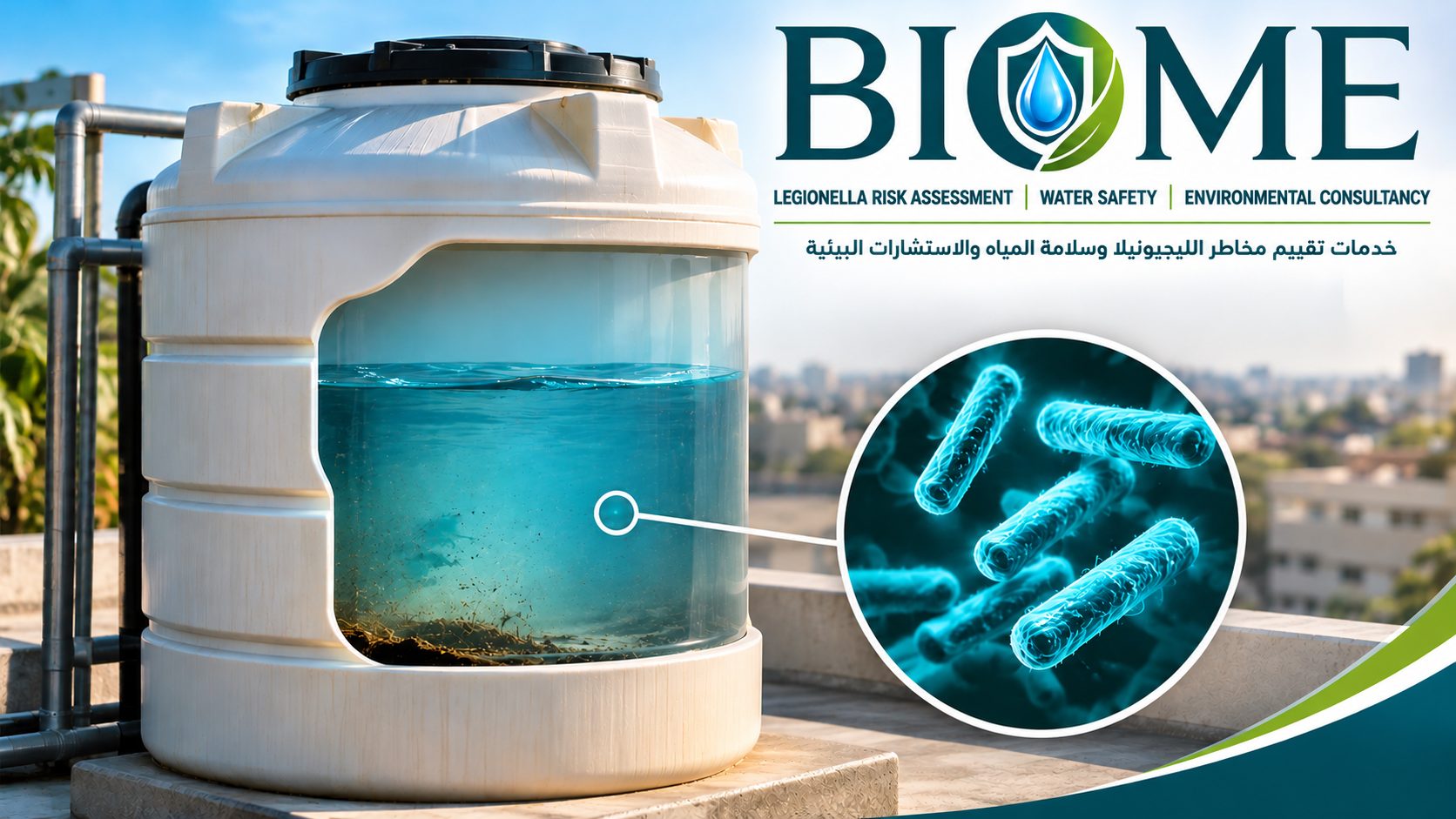
Most of us only think about the water tank when something breaks or the water stops. If the tap runs clear, that is the end of the matter. But the tank is where water sits longer than anywhere else in a building, and that matters when the bacteria in question is Legionella.
Why tanks can be a problem
Legionella lives naturally in freshwater, usually in numbers too small to matter. Trouble starts when a building's water system gives it what it likes: temperatures between about 20°C and 45°C, water that barely moves, and a layer of sediment or biofilm to settle in. A tank can offer all three. Picture a cold water tank on a roof in the middle of summer, in direct sun. The water inside can end up much warmer than it should be. Cold water is meant to stay below 20°C.
Not every tank has Legionella in it. But a neglected one makes things easier for it.
How people get infected
People tend to assume the risk is in drinking the water. Usually it isn't. Legionnaires' disease is a serious kind of pneumonia, and you catch it by breathing in very fine droplets of contaminated water, like the mist from a shower or a running tap. It does not normally pass from one person to another.
Why it gets missed
The early symptoms look like flu or any other chest infection: fever, cough, shortness of breath, aching muscles and headache. Some people also have diarrhoea or become confused. Symptoms usually appear within two to ten days of exposure, sometimes later. Because it looks so ordinary, Legionnaires' disease can be mistaken for flu, and it is only found when a doctor thinks to test for it.
Older adults, smokers, and people with lung, heart or kidney disease, diabetes or a weak immune system are the most likely to become seriously ill. Healthy children are rarely affected, but a child with weak immunity or a serious underlying illness can be.
If someone in one of these groups has a flu-like illness with a high fever, a cough that won't go away or trouble breathing, they should see a doctor. Mentioning a recent stay in a hotel or any building with a shared water system helps the doctor think of Legionella.
Clear water is not proof of safe water
You cannot see, smell or taste Legionella. Water from a tank can look perfect and still carry it, and any disinfectant that came with the supply has had time to fade by the time the water leaves the tank.
Laboratory testing is useful, but one result only tells you about one sample, taken on one day. We went into this in an earlier article: A Negative Legionella Test Does Not Guarantee a Safe Water System.
What you can do
- Keep the tank properly covered, with screens on the vents and overflows so dust and insects stay out.
- Open it and look inside at least once a year. Check for sediment, debris, rust and anything else that should not be there.
- Keep cold water cool. Shade or insulate the tank, and measure the temperature at the tank itself, especially in summer.
- Don't store much more water than the building actually uses. The bigger the tank is compared to demand, the older the water gets.
- Clean and disinfect when the inspection shows it is needed, and after any repair or work on the tank.
Cleaning the tank is not the whole job
Legionella can also grow further down the line, in pipes, dead legs (pipes that no longer carry flow), shower heads and water heaters. Hot water should be stored at 60°C or above and reach the taps at 50°C or above. A clean tank feeding stagnant pipes or lukewarm hot water is still a problem, so the whole system needs attention, not just the tank.
A water tank does not have to be a worry. It just needs someone to look at it now and then, whether it serves a family home or a large building.
BIOME is an environmental consultancy in Jordan, working on water safety and Legionella control.